
Bowers & Wilkins Global Review: Living with Flagship British Audio Gear
October 21, 2026Living with Bowers & Wilkins Global Gear: My Personal Deep Dive into British High-Fidelity Audio
I still remember the first time I heard a proper set of British stereo speakers. It was in a basement apartment outside Boston about twelve years ago. A friend had inherited a pair of vintage floorstanders, wired them up to a heavy integrated amplifier, and dropped the needle on a pristine vinyl copy of Steely Dan’s Aja. The brass exploded into the room with so much bite and air that I stopped mid-sentence. Up until that afternoon, music had always been something compressed playing through cheap computer peripherals or tinny plastic earbuds.
That afternoon permanently warped my expectations for how music should sound. Ever since, I have been slowly climbing the audiophile ladder, swapping out components, testing wireless cans on long subway commutes, and obsessing over mid-range separation. When people talk about legacy audio engineering, the conversation invariably gravitates toward one name: Bowers & Wilkins. Known across recording studios from Abbey Road to Skywalker Sound, the company has spent decades refining the art of acoustic precision.
Over the past six months, I decided to immerse myself in the current ecosystem offered through Bowers & Wilkins Global. I wanted to see whether their modern gear—from wireless noise-canceling flagships to living room desktop rigs and active standmount speakers—still carries that same acoustic magic in an era dominated by mass-market plastic lifestyle electronics. If you have been eyeing their catalog or debating whether premium sound is worth the financial leap, here is my hands-on walkthrough of what it feels like to live with this gear day in and day out.
Visit Official Bowers & Wilkins Global Website Now
The DNA of Bowers & Wilkins: Why Audiophiles Revere the Brand
Before jumping into specific listening notes, it helps to understand what you are actually buying into. A lot of consumer audio brands outsource their drivers, throw generic off-the-shelf digital signal processing chips into plastic shells, slap a celebrity name on the headband, and spend millions on billboard campaigns. Bowers & Wilkins has historically operated on a completely different philosophy.
Originating in Worthing, West Sussex in 1966, John Bowers founded the company with a simple ambition: to produce a loudspeaker that did not add its own coloration to the recording. Instead of hyping the bass to mask poor detail or boosting the highs to create artificial crispness, the goal was sheer transparency. If an acoustic guitar string buzzes slightly against a fret in the studio, you should hear it. If a vocalist pulls three inches back from the microphone on the chorus, you should perceive the depth change.
Over the decades, that pursuit gave birth to genuine engineering breakthroughs: the iconic yellow Kevlar cones, the Continuum cones that replaced them, decoupled double dome tweeters, and the striking Nautilus spiral enclosures. When you look across the current portfolio on the Bowers & Wilkins Global platform, you notice that this studio-grade engineering has trickled down into everyday gear. Whether you are browsing their entry-level 600 Series bookshelf speakers or their top-tier Px8 wireless headphones, the physical hardware feels substantial, purposeful, and strikingly handsome.
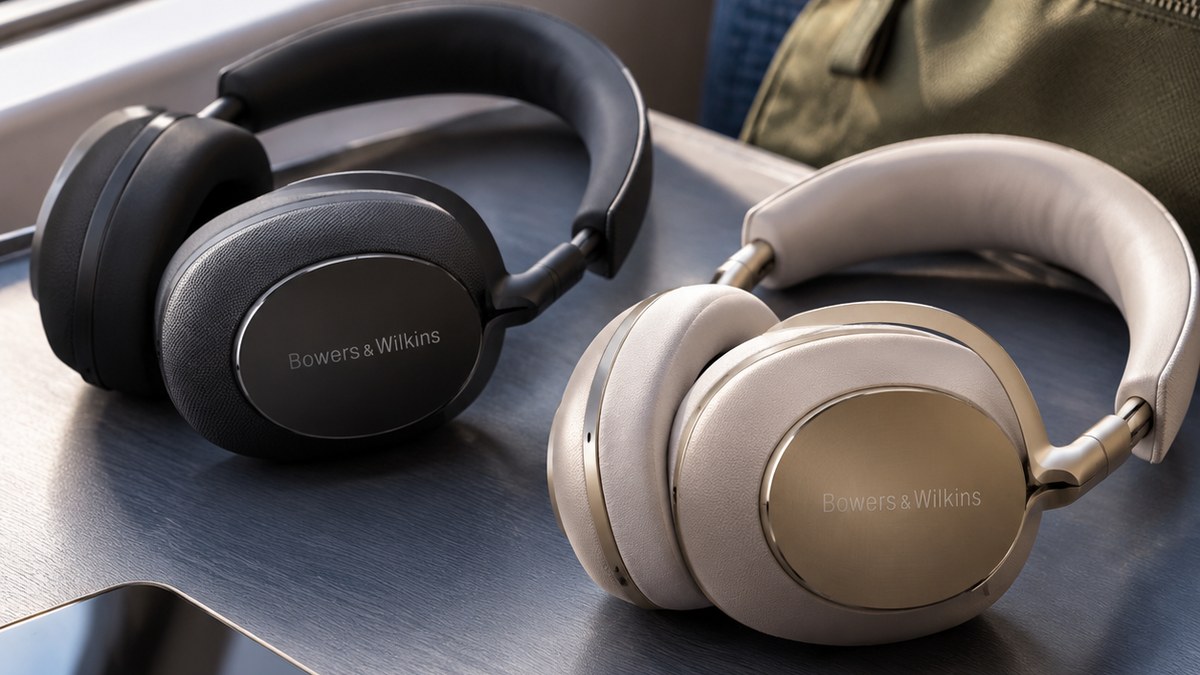
The Portable Experience: Living with the Px7 S2e and Flagship Px8
For most people today, their primary gateway into high-end audio is a set of over-ear headphones. We wear them on commuter trains, throughout eight-hour office shifts, on cross-country flights, and during late-night reading sessions. Over the last several months, I spent countless hours switching between the Px7 S2e and the flagship Px8.
Build Quality, Materials, and Wear Comfort
The moment you take the Px8 out of its hard-shell fabric carrying case, you realize why the price point sits where it does. There is virtually zero squeaky plastic. Instead, your hands make contact with cast aluminum arms, supple Nappa leather along the headband and earcups, and finely textured outer earcups. The weight distribution is balanced; it settles onto the crown of your head without that annoying hotspot pressure point that plagues many heavier cans.
The Px7 S2e is no slouch either. While it swaps the Nappa leather for a durable woven fabric finish and synthetic leather padding, the core architecture remains rugged. I have thrown the Px7 S2e into an overstuffed messenger bag day after day without treating it with kid gloves, and it looks just as immaculate as the morning it arrived.
Sound Signature: Rich, Textural, and Unapologetically Dynamic
Here is where Bowers & Wilkins departs from the clinical, flat sound profiles of studio reference monitors. These headphones are engineered to make you feel the rhythm. The bass is not bloated or boomy—it does not bleed into the lower midrange like you find on mainstream fashion headphones. Instead, it hits with punch, speed, and real physical texture.
Listening to Massive Attack’s Angel, the descending sub-bass notes have a physical presence that feels rounded and fully formed, yet the snare snaps cleanly overhead. Transitioning to acoustic jazz—Bill Evans Trio playing Sunday at the Village Vanguard—the brushwork on the cymbals shimmers without ever piercing your ears. The bespoke 40mm carbon cone drive units in the Px8, angled slightly inside the earcups to mimic the soundstage of stereo loudspeakers, offer an uncanny sense of instrument placement. You can pinpoint exactly where the upright bass is standing relative to the piano.
Active Noise Cancellation in the Real World
Let’s address noise cancellation directly. If your sole criterion for buying headphones is complete, tomb-like sensory deprivation on an airplane, brands like Sony or Bose still edge out ahead by a hair. However, their aggressive noise cancellation often introduces an unsettling inner-ear pressure—that subtle “cabin pressure” feeling. Bowers & Wilkins took a much more refined approach. Their ANC system successfully drowns out low-frequency engine rumbles, air conditioner hums, and coffee shop murmur without distorting the underlying music or creating acoustic fatigue. To me, that is the right trade-off.
Visit Official Bowers & Wilkins Global Website Now
The Home Sound: Bringing the Studio into the Living Room
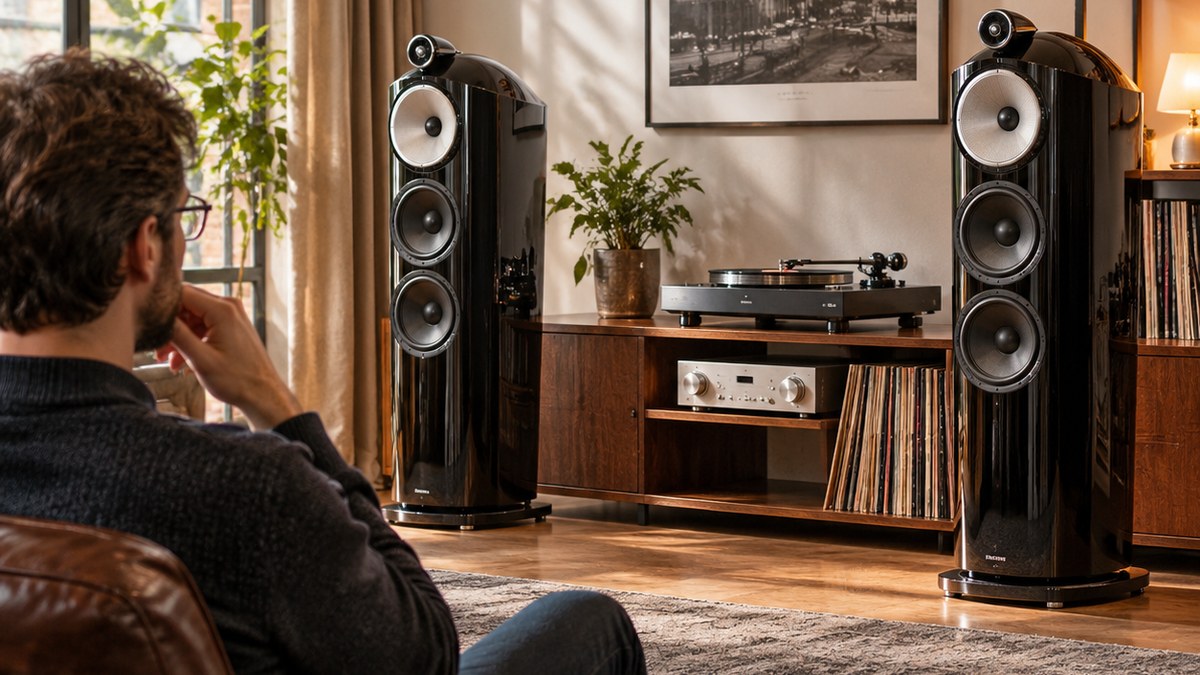
While the portable cans blew me away during daily travel, my true obsession has always been stereo imaging in a physical room. I set up a dedicated listening station featuring a pair of standmount speakers from their 700 Series alongside an integrated amplifier fed by a high-resolution streaming DAC.
From the first track, what jumped out was the expansive horizontal soundstage. Standmount speakers of this caliber have a neat trick: if you place them roughly six to seven feet apart, toe them in slightly toward your primary listening chair, and give them a foot of breathing room from the back wall, the physical speakers completely disappear. You close your eyes, and Fleetwood Mac is performing directly in front of you on a small raised stage.
The Continuum cone midrange driver reproduces human vocals with extraordinary realism. Listening to Gregory Porter’s rich baritone on Liquid Spirit, you catch the subtle rasp, the intake of breath before a line, and the resonant chest tone that cheaper crossover networks tend to smudge into the background. Meanwhile, the Decoupled Carbon Dome tweeter sits up top, isolated from the cabinet vibrations below, preserving ultra-high-frequency micro-dynamics without harshness.

What Real Listeners Say: Unfiltered User Feedback
Audio is deeply personal. Our ear canals have unique physical shapes, our musical tastes vary wildly, and what sounds bright to one listener might sound smooth to another. During my research and discussions across audio forums, I collected impressions from other daily owners using the Bowers & Wilkins Global product range. Here are four perspectives that mirror my own findings:
“I made the jump from standard office headphones to the Px8 last fall after getting tired of hollow plastic frames breaking at the hinges. The construction is incredible, but what really sold me was acoustic guitar separation. You can actually hear the fingers sliding along the nickel windings on the strings. They are expensive, yes, but they feel like a luxury watch that also happens to sound mind-blowing.”
— Marcus T., Denver, CO (Px8 Owner)
“Set up a pair of 606 S3 bookshelf speakers in my small home office powered by a 50-watt British amp. The bass response from a 6.5-inch driver is shocking. You get tight, punchy kick drums without needing an enormous subwoofer cluttering up the floor. Just make sure you spend time getting your speaker stands at ear level, because proper positioning transforms them from ‘pretty good’ to phenomenal.”
— Elena R., Austin, TX (600 Series User)
“I use the Pi7 S2 earbuds for daily subway transit and client Zoom calls. While the battery life is moderate compared to cheaper brands that last 10 hours on a single charge, the audio reproduction is on another planet. It sounds like a pair of proper high-fidelity over-ears shrunk down into ear tips. Vocals sound naturally warm instead of robotic.”
— Dave K., Chicago, IL (Pi Series Commuter)
“The Zeppelin wireless speaker sits on our sideboard in the dining room. My wife loved the sculptural look, while I was skeptical about whether a single-enclosure wireless unit could fill an open-plan kitchen and dining area. I was wrong. The stereo separation and dispersion fill the entire main floor without needing to crank the volume to distortion levels. It has become our daily soundtrack machine.”
— Sarah & Julian M., Seattle, WA (Zeppelin Owners)
Living with the Software: The Bowers & Wilkins Music App
Hardware is only half the battle in modern personal audio; software stability can make or break the daily experience. Early iterations of the companion software had their quirks, but the unified Bowers & Wilkins Music app has matured into a stable, well-curated hub.
The app connects smoothly across your registered hardware. Through it, you can manage active noise-cancellation modes, adjust transparent pass-through sensitivity, toggle wear sensors, and customize environmental equalizers. For wireless home speakers like the Zeppelin or the Formation series, the app integrates directly with streaming services like Tidal, Qobuz, Deezer, and TuneIn radio, letting you pull 24-bit high-resolution audio files straight down without relying on phone-dependent Bluetooth compression.
My only minor gripe is the EQ adjustment. The app provides simple bass and treble sliders rather than a fully parametric multi-band equalizer. For purists who believe a speaker should be tuned right out of the box, this is a non-issue. But if you like notching out a specific 400Hz frequency peak caused by an awkward room corner, you will need to manage that upstream via your streaming player or source amplifier.
Visit Official Bowers & Wilkins Global Website Now
Design Philosophy: Modern Sculptures That Blend In
One undeniable reality of high-end audio is that much of it looks like laboratory testing equipment. Chunky black boxes, exposed heat sinks, and industrial grills can spark serious household debates over living room aesthetics. This is an area where Bowers & Wilkins Global consistently outclasses almost everyone else in the industry.
Take the Zeppelin, for example. Resembling an elongated, aerodynamic airship floating above a metal pedestal, it serves as an architectural conversation piece before you even power it up. Inside that distinctive shell sits a dedicated five-channel acoustic setup: two decoupled double-dome tweeters, two 90mm midrange drivers with Fixed Suspended Transducer technology, and a central 150mm subwoofer powered by 240 watts of clean amplification. It manages to look graceful while producing room-shaking physical volume.
The same aesthetic care applies to their traditional speakers. Magnetic grilles mean there are no ugly mounting peg holes on the front baffles if you prefer to leave your drive units exposed. The cabinet veneers—whether real wood oak, satin white, or deep gloss black—are finished with furniture-grade attention to detail. These are pieces of gear you feel proud to showcase rather than hide away in an audio closet.
Practical Tips to Maximize Your Bowers & Wilkins Setup
If you decide to bring this gear home, a few practical adjustments can drastically improve your everyday listening experience:
- Give New Drivers Proper Run-in Time: While some dismiss driver burn-in, the mechanical surrounds on Bowers & Wilkins drivers are stiff out of the factory. I noticed the lower midrange and bass frequencies on both the Px8 and the bookshelf speakers smoothed out noticeably after about 30 to 40 hours of playback.
- Experiment with Headphone Placement: Because the drivers in the Px7 S2e and Px8 are angled within the earcups, moving the headband slightly forward or backward changes how the treble waves hit your ear canal. Take five minutes to adjust the angle on your head; you will find a sweet spot where soundstage depth snaps into focus.
- Do Not Starve Loudspeakers of Power: Bowers & Wilkins passive loudspeakers love clean current. Even if a speaker is rated at an accessible 88dB sensitivity, their impedance can dip down to 3 ohms during complex dynamic passages. Pairing them with an amplifier that delivers plenty of high-current power keeps the bass tight and rhythmic rather than muddy.
- Leverage High-Resolution Sources: If you are listening strictly to low-bitrate Bluetooth streams or heavily compressed streaming files, you are driving a sports car in a school zone. Connect over USB-C on the headphones to unlock the internal 24-bit/96kHz DAC, or feed high-res FLAC files to your home setup to hear what these drivers can genuinely achieve.
The Value Equation: Is It Worth the Premium?
Let’s not dance around the reality: audio gear bearing the Bowers & Wilkins badge commands a noticeable financial investment. You can buy good noise-canceling headphones for two hundred dollars, and you can buy a functional wireless soundbar for three hundred. So why spend significantly more here?
The answer comes down to longevity, tactile satisfaction, and emotional connection. Cheap plastic headphones wear out. Their fake pleather flushes, their hinges crack under stress, and their throwaway tuning makes music sound like background noise. Bowers & Wilkins hardware feels like heirlooms. The physical touchpoints—die-cast metals, stitched hides, finely milled volume dials—elevate your everyday routine.
More importantly, the acoustic character pulls you into active listening. You stop treating albums like sonic wallpaper while doing dishes; you sit down, put your phone face down on the table, and listen to how a drummer modulates the ride cymbal across a dynamic chorus. In our world of disposable commodities, owning something built with deliberate craftsmanship and genuine sonic ambition is a breath of fresh air.
Final Thoughts
My journey through the Bowers & Wilkins Global catalog reminded me why I fell in love with hi-fi sound in that cramped basement all those years ago. The brand has pulled off a tricky high-wire act: honoring their decades-long acoustic legacy while adapting smoothly to wireless connectivity, modern streaming apps, and sophisticated active noise cancellation.
Whether you are looking to elevate your daily commute with the peerless tactile luxury of the Px8, bring true stereo depth into your living room with a pair of 600 or 700 Series loudspeakers, or anchor your living space with the iconic Zeppelin, this gear delivers on its reputation. It respects the original artistry of the musicians who created the tracks, delivering music with all the visceral weight, transparency, and raw emotion it deserves.