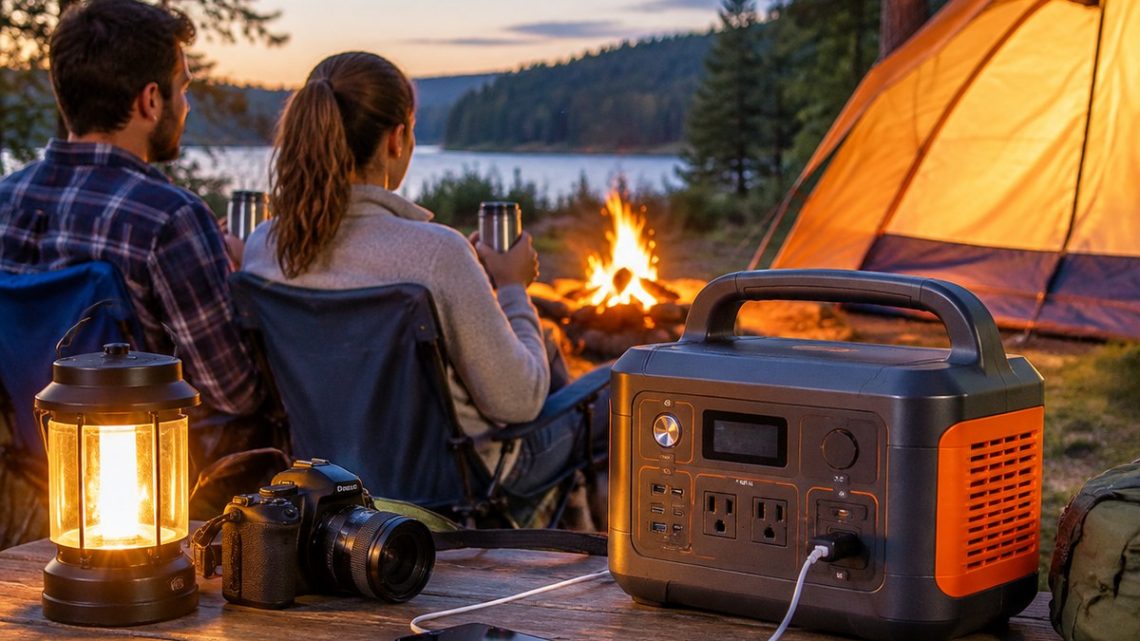
Jackery Portable Power Stations Review: Real-World Camping and Home Backup Test
November 8, 2026Jackery Portable Power Stations: My Hands-On Experience Running Camp Gear and Home Backups
A couple of summers back, our neighborhood got hit with a freak windstorm on a Tuesday night. Within twenty minutes, tree branches snapped three power poles down the street, plunging our entire block into pitch-black silence. Like a lot of people, my immediate thought went straight to the refrigerator full of groceries and whether our phones had enough battery to get us through work calls the next morning. My neighbor fired up a clunky two-stroke gas generator out on his driveway—it sounded like an unmuffled lawnmower revving inside an oil drum, and the exhaust fumes drifted straight through our screened windows.
That night convinced me it was time to find a cleaner, quieter solution. I had been hearing about solar generators and portable battery stations for outdoor trips, but I was skeptical about whether battery tech was truly ready to handle real-life demands. After spending months researching, comparing specs, and talking to fellow campers, I decided to pull the trigger on Jackery gear. Fast-forward through dozens of weekend camping trips, tailgate cookouts, and a few more nasty grid blackouts, and my perspective on portable power has completely changed.
If you are looking to secure a reliable power setup for remote weekends, van life, or simply keeping your essentials alive when the power grid cuts out, checking out their lineup is a great place to start:
Visit Official Jackery Website Now
What Exactly Is Jackery and Why Is Everyone Talking About It?
Jackery basically pioneered the compact outdoor power station market back around 2012. You have probably seen their signature black-and-orange boxes at campsites, tailgates, or in the back of overland rigs. Unlike old-school lead-acid jump packs that weighed a ton and died if you left them sitting for three months, Jackery builds all-in-one lithium battery hubs that pack pure sine wave AC inverters, multiple USB ports, 12V car sockets, and advanced solar charge controllers into a single portable housing.
The whole appeal comes down to simplicity: you carry it where you need it, push a button to activate the outlets, and plug in your gadgets or appliances. There are no carburetor pull-strings, no oil changes, no spark plugs, and zero toxic fumes. You can literally run one sitting on your nightstand while you sleep.
First Impressions: Build Quality and Everyday Usability
Taking a Jackery unit out of the box, the first detail that stands out is how sturdy the shell feels. The casing is built from durable, fire-retardant polycarbonate that can handle being tossed into the back of a truck or bumped against rock ledges at a campsite. The built-in carry handle is solid—on the smaller units it folds down flat, while on larger models like the Explorer 1000 v2 or 2000 Plus, the ergonomics make lugging the weight manageable without pinching your fingers.
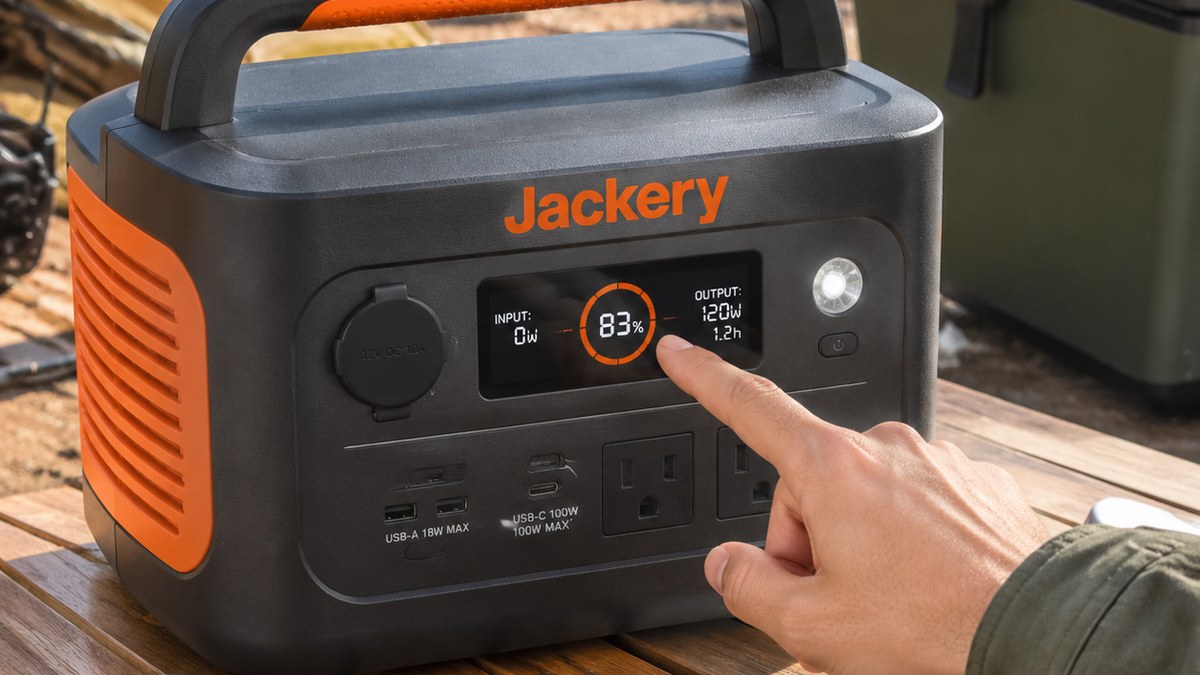
The digital display screen on the front panel is bright and easy to read even in direct midday sun. It shows your exact battery percentage, incoming wattage from solar or wall charging, and outgoing wattage being consumed by your devices. It also calculates remaining runtime based on your current load. That real-time calculation takes away all the guessing games. If I plug in my 12V portable fridge and see it pulling 45 watts, the screen tells me immediately how many hours of juice I have left at that rate.
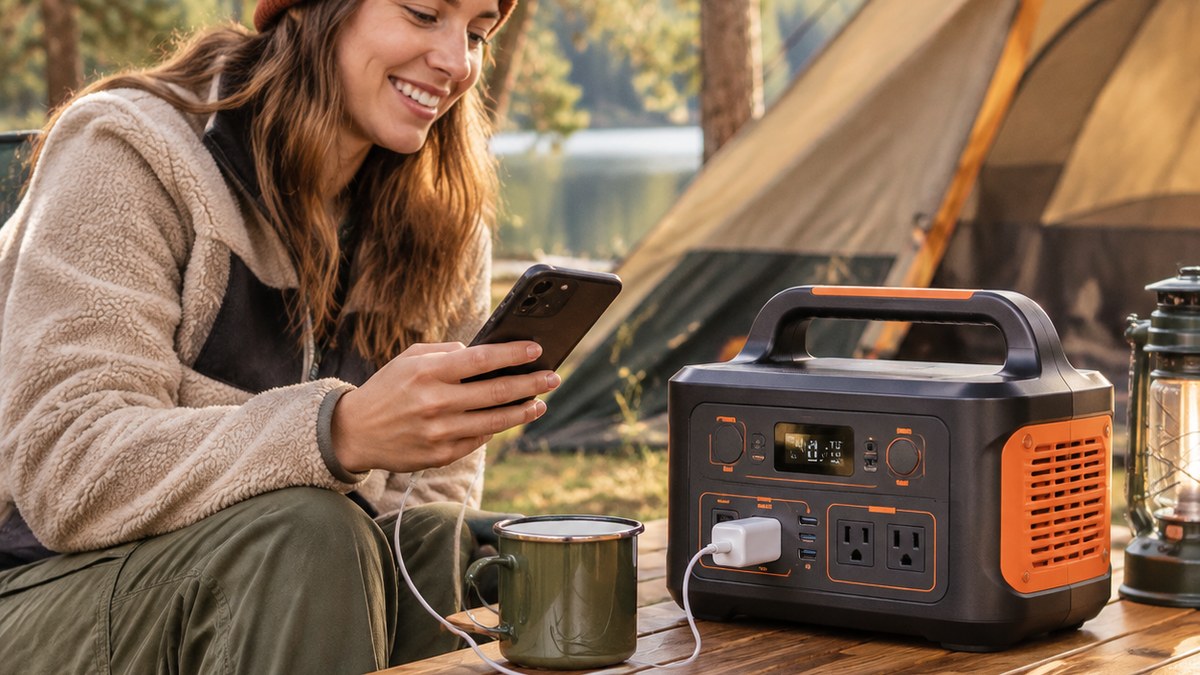
The port layout is straightforward. You get standard three-prong AC wall plugs, fast-charging USB-C ports with Power Delivery (great for modern MacBooks and smartphones), USB-A ports for accessories, and a regulated 12V car-style socket. That regulated 12V port matters a lot: some cheap off-brand battery packs drop voltage as the battery drains, causing portable coolers or CPAP machines to shut down unexpectedly. Jackery holds a steady voltage across the entire discharge cycle.
Putting It to Work: Real-World Camping in the Colorado Backcountry
Last autumn, my partner and I packed the truck for a four-day dry camping trip up near Buena Vista, Colorado. Temperatures dipped down into the low 30s overnight, and we had zero cell service, let alone shore power. In the past, this kind of trip meant nursing our camera batteries, running the truck engine every afternoon just to top off our phones, and using a cooler full of melting ice that turned our cheese and bacon into soggy mush.
This time around, we brought along our Jackery station along with a couple of foldable solar panels. We ran an electric blanket on low for about forty minutes before climbing into our sleeping bags to take the chill off our cot. During the day, we ran a 45-quart portable compressor fridge non-stop, charged two mirrorless camera batteries, kept our rechargeable headlamps ready, and even ground our coffee beans every morning with a small electric burr grinder.
Over four days of steady use, we never once dropped below 40% battery capacity. Each morning after breakfast, I unfolded the solar panels, angled them toward the southern sky, and plugged the solar cable straight into the input jack. Even with a few wispy clouds drifting across the peaks, the system pulled in between 140 and 175 watts consistently, topping the pack back up to 100% by early afternoon.
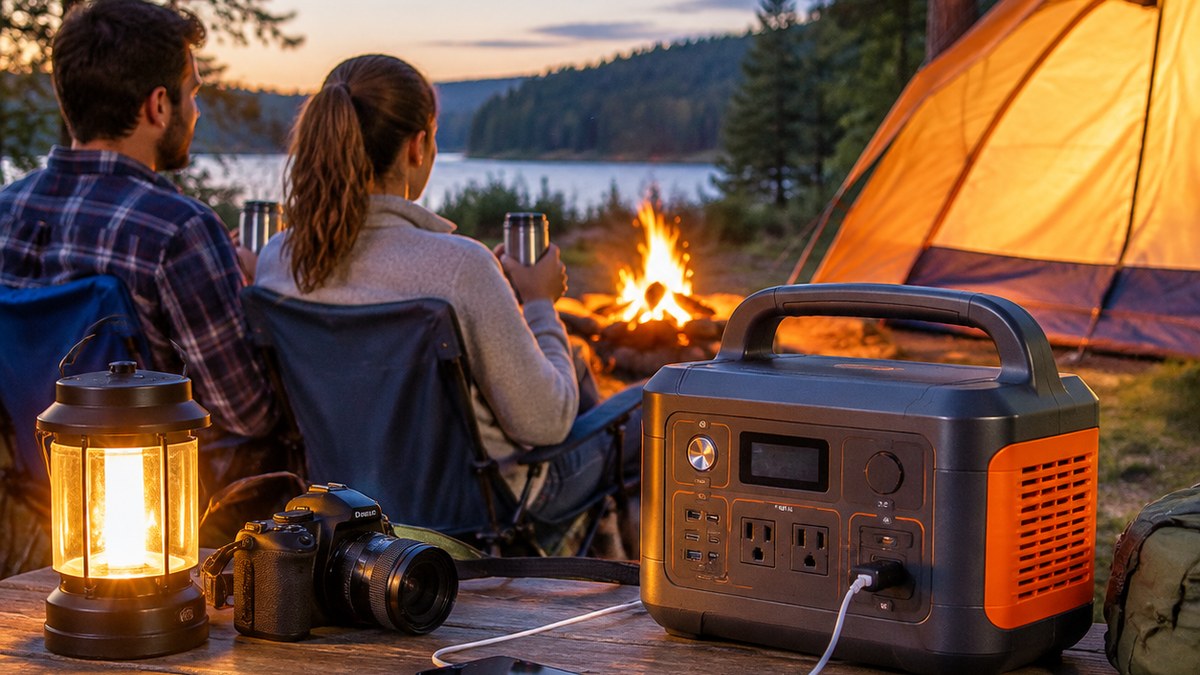
Sitting around the campfire with dead silence instead of the droning racket of a gas motor made the whole trip feel like real wilderness camping, but with the modern convenience of cold drinks and warm bedding.
Visit Official Jackery Website Now
Home Emergencies: When the Power Grid Fails
While outdoor recreation is a blast, emergency preparedness is where a Jackery proves its actual worth in gold. Last winter, an ice storm coated our county in a quarter-inch glaze. Transformers started popping around 4:00 AM, and our house went dark and cold.
Here is what I was able to run during that 14-hour outage without breaking a sweat:
- Full-Sized Kitchen Refrigerator: Modern energy-efficient fridges do not run continuously; their compressors cycle on and off. Plugging the fridge directly into the Jackery AC outlet kept our food safely chilled all day, using roughly 35% of the total capacity over an 8-hour stretch.
- Home Wi-Fi Router & Modem: Because broadband lines often remain active even when local power drops, plugging our router into the AC port kept our high-speed internet humming. Both of us finished our workday without missing a single Zoom meeting.
- CPAP Medical Machine: For folks who rely on a sleep apnea machine, a sudden blackout can mean a sleepless, dangerous night. Running a CPAP on DC power without the heated humidifier draws surprisingly little power, easily giving 2 to 3 full nights of rest on a single charge.
- LED Desk Lamps and Device Charging: We kept multiple phones, iPads, and flashlights topped off, keeping the living room calm instead of chaotic.
The best part was zero setup friction. I did not have to drag a heavy gas motor out into freezing rain, mess with gas cans, or run long extension cords through cracked doorways that let freezing drafts into the living room. I simply set the unit right on our kitchen counter and plugged things in.
Solar Charging: Real-World Efficiency with SolarSaga Panels
Let’s talk about solar charging, because marketing materials can sometimes set unrealistic expectations. Jackery pairs its power stations with their SolarSaga folding panels. These panels use monocrystalline silicon cells protected by durable ETFE film, and they come with built-in kickstands, magnetic carrying handles, and zippered pockets for your charging cables.
In ideal, bluebird laboratory conditions, a 100-watt panel produces close to 100 watts. But out in the backyard or on a campsite lawn, sun angles, atmospheric haze, ambient temperature, and panel orientation will affect your numbers. In my experience across spring and summer testing in the US:
- On a clear, crisp sunny day around noon, I regularly see between 80 to 88 watts of actual input from an individual 100W panel. That is an impressive 80-88% real-world efficiency rate.
- On hazy or high-humidity summer afternoons, that figure usually sits around 65 to 75 watts.
- Under heavy overcast skies, input drops down to 15 to 25 watts, which is standard physics for any solar panel on the market.
Because Jackery uses advanced MPPT (Maximum Power Point Tracking) charge controllers inside their units, the system automatically adapts to fluctuating sunlight. If a stray cloud drifts over, you will see the wattage dip on the display, and as soon as the sun breaks through, the controller snaps right back to peak intake within seconds. Setting up the panels takes literally thirty seconds: unclip the magnetic closures, fold out the legs, angle them towards the sun, and click the cable into the station.
What Other Real Users Are Saying
I always like to see if other owners share my thoughts or if their experiences differ across different parts of the country. Here are a few authentic comments and feedback highlights from fellow everyday owners:
“I bought the Explorer 1000 for my converted camper van setup in the Pacific Northwest. Between my 12V Dometic cooler, water pump, and charging my drone and laptop, it has never let me down. Even during drizzly weeks in Oregon, plugging into the 12V car socket while driving charges it right back up between trailheads.”
— Marcus T., Bend, Oregon
“Living on the Gulf Coast of Florida, hurricane season is an annual headache. We keep our Jackery topped off at 100% in the hallway closet. During the last storm, it ran my mother’s oxygen concentrator and our floor fan through two humid nights without a whisper of noise. It gives us incredible peace of mind.”
— Elena R., Tampa, Florida
“I do mobile woodworking and remote photography out of my truck bed in Utah. Being able to run battery chargers for my power tools and run my edit laptop on location without carrying gasoline or smelling exhaust fumes in the back of my truck is fantastic. Sturdy, simple, and tough as nails.”
— Derek W., Salt Lake City, Utah
“My biggest surprise was how much my kids use it during backyard campouts and tailgates. We run an outdoor movie projector and speakers off it in the grass. It is simple enough that my 12-year-old can carry it outside and hook everything up safely.”
— Sarah K., Cincinnati, Ohio
Visit Official Jackery Website Now
Which Jackery Model Makes Sense for Your Lifestyle?
Jackery has expanded its lineup over the years, ranging from compact glovebox companions to heavy-duty whole-house battery setups. Choosing the right one comes down to what you actually plan to plug into it.
1. Compact Explorers (Explorer 240 / 300 / 500)
These lightweight grab-and-go units weigh between 6 and 13 pounds. They are built for day trips, fishing outings, drone pilots, and minimalists who only need to charge laptops, cameras, phones, and run low-draw LED lanterns or small 12V car coolers. You can easily tuck one under your passenger seat or carry it on a short hike down to the beach.
2. The Sweet Spot (Explorer 1000 v2 / Pro)
If you ask me, this middle bracket is the ideal balance of capacity, output power, and physical portability. Weighing around 22 to 24 pounds, it is light enough for one person to carry comfortably with one hand, yet it provides over 1,000 watt-hours of capacity with a 1,500W pure sine wave inverter. It can handle high-draw kitchen appliances like coffee makers, blenders, small microwaves, and electric skillets, making it an incredible companion for family camping and standard home blackout protection.
3. Heavy-Duty Backup (Explorer 2000 Plus & Beyond)
For those living in areas with frequent severe weather, full-time RVers, or folks wanting to back up heavy loads like full-size sumps, well pumps, and power tools, the Plus series delivers massive output. These models utilize advanced LiFePO4 (Lithium Iron Phosphate) battery chemistry, offering expandable battery packs and over 4,000 charge cycles before reaching 80% capacity. They are heavier, but built-in luggage-style wheels and collapsible handles make moving them across floors smooth and hassle-free.
Things to Keep in Mind: The Drawbacks
No gear is completely flawless, and it helps to understand the limitations before you invest your hard-earned money:
- Weight on Big Capacity Units: Once you move past the 1,500Wh mark, batteries are bound by physics. While Jackery designs excellent handles and wheels on their high-capacity models, lifting a 60-pound unit into a tall truck bed takes some muscle.
- Solar Speeds Depend on Weather: Solar is not an instant wall plug. If you encounter three straight days of torrential rain during a storm, solar panels will produce very little energy. It is smart practice to top your station up from a wall outlet before a predicted weather event hits.
- Upfront Investment: Quality portable lithium power costs more than an entry-level gas generator from a big-box hardware store. However, when you factor in zero fuel purchases, zero maintenance costs, zero oil filters, and the ability to safely run it indoors, the long-term value makes up for the price tag.
Practical Tips for Getting the Most Out of Your Station
Over months of hands-on use, I have picked up a few practical habits that will keep your station running at peak performance for years:
- Use DC Ports Whenever Possible: The AC inverter has to convert DC battery storage into alternating wall current, which consumes a tiny bit of overhead power (usually 10-15% conversion loss). When charging phones or running car coolers, plug directly into the USB-C or 12V cigarette ports instead of using wall adapters. You will squeeze out extra runtime.
- Store at Room Temperature: Like your smartphone, lithium batteries dislike extreme cold or blazing heat. Store your unit indoors at room temperature, ideally charged to around 60-80% if you are keeping it on standby for seasonal emergencies. Check on it every 3 to 6 months to top it off.
- Angle Your Panels Periodically: When recharging via solar during campsite downtime, adjusting your panels twice a day—once mid-morning and once mid-afternoon—to follow the arc of the sun can increase your total daily energy harvest by up to 25%.
The Verdict: Is Jackery Worth It?
After putting Jackery hardware through messy weekend rainstorms, remote backcountry trails, and frustrating neighborhood blackouts, I can confidently say it has earned a permanent spot in my garage and truck bed. It has completely eliminated the stress of wondering whether our food will spoil during a storm, and it has made dry camping with family infinitely more comfortable and peaceful.
The build quality is rugged, the operation is dead simple, and the freedom of pulling silent, emission-free electricity directly from the sun is tough to beat. Whether you want to upgrade your camping setup or protect your family during the next grid outage, Jackery is an investment that pays for itself the very first time your power goes out.
Take a look at their latest deals, modular solar bundles, and model sizes to find the right match for your home and travel needs: