Six Months with Hurom America: A Real Kitchen Review of Slow Cold-Press Juicing
October 19, 2026Six Months with Hurom America: A Real Kitchen Review of Slow Cold-Press Juicing
If you walked into my kitchen about seven months ago at 6:45 on a Tuesday morning, you would have heard something resembling a jet engine spooling up on a runway. That was my old centrifugal juicer. It screamed, rattled my quartz countertops, spat warm, oxidized foam into a plastic pitcher, and woke up my spouse and dog without fail. Juicing felt like a messy, noisy chore that required earmuffs and fifteen minutes of frantic scrubbing with a stiff plastic brush.
I got tired of tossing damp pulp that still had half its liquid locked inside, so I finally decided to look into slow masticating machines. That search led me straight to the brand that basically invented the vertical cold-press format decades ago: Hurom. Buying through Hurom America felt like a major kitchen upgrade, both in terms of design and price tag. Now that I have run hundreds of pounds of celery, dense carrots, ginger knobs, leafy kale, and even soaked almonds through their machine, I want to share what day-to-day life with it actually looks like.
If you are thinking about overhauling your morning routine, you can check out their current lineup directly: Visit Official Hurom America Website Now.
Why I Decided to Switch to a Slow Masticating Juicer
For years, I bought into the idea that high-speed juicing was fine because it was fast. You drop an entire apple down a wide chute, hear a violent grinding sound, and out pours something resembling juice. But the reality is that centrifugal machines spin at thousands of revolutions per minute. All that speed creates friction and heat, while whipping a huge amount of ambient air into the liquid. The juice comes out separated, with a thick layer of brownish foam on top, and it starts turning bitter within twenty minutes.
Slow juicing operates on the opposite principle. Instead of shredding produce with high-speed blades, Hurom uses a heavy, food-grade Ultem auger that turns slowly—usually between 43 and 80 RPM depending on the model. It gently crushes and presses the plant fibers against grooved strainers, mimicking a slow hand squeeze on an industrial scale. The result is zero heat damage, minimal oxidation, and juice that actually stays bright, vibrant, and stable in a mason jar in the refrigerator for up to 72 hours.
I wanted a machine that would let me batch juice on Sunday afternoons for the upcoming work week without watching the liquid turn brown by Tuesday morning. After browsing the US catalog on the Hurom America site, I opted for one of their self-feeding models, eager to see if the hype around hands-free cold pressing held up in an everyday kitchen.
Unboxing and Countertop Footprint
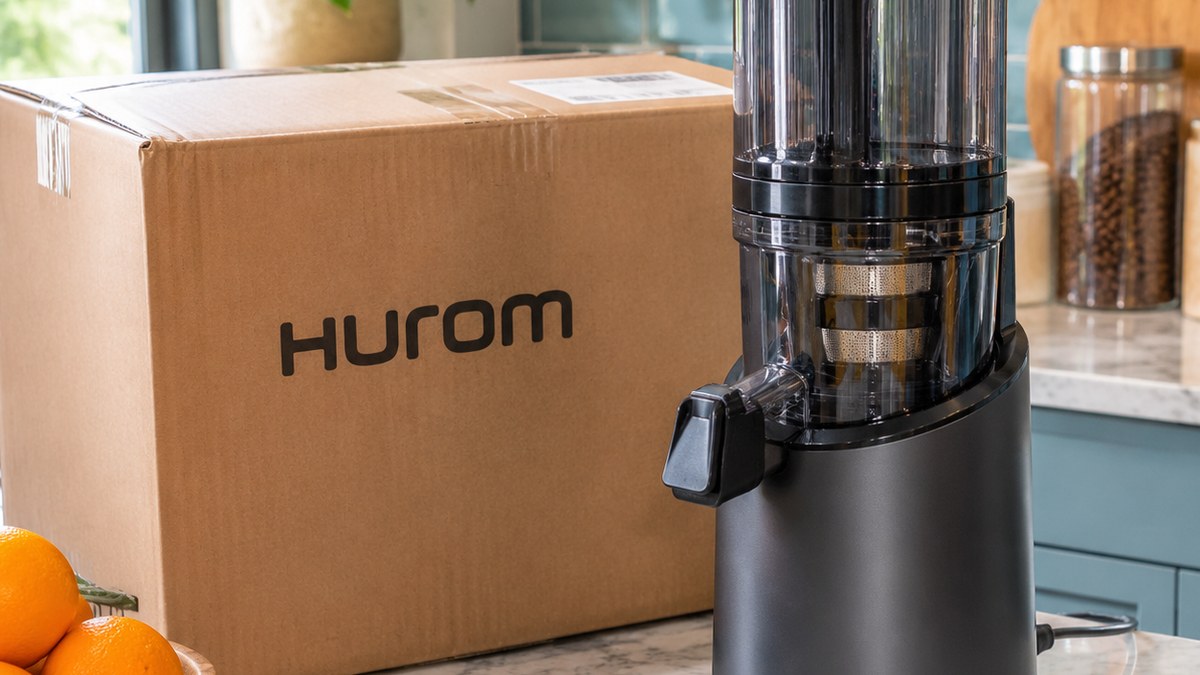
The package arrived within four business days via FedEx from Hurom America. Right away, you notice the weight of the box. High-end kitchen appliances have a certain heft to them, and this motor base feels substantial. It weighs enough that it will not slide around on your counter while grinding through rock-hard sweet potatoes or winter beets.
Aesthetics clearly play a big role in Hurom’s design philosophy. Unlike bulky horizontal machines that look like laboratory equipment and take up half your prep counter, Hurom designs their machines with a tall, compact vertical footprint. The matte finish and rounded lines look sleek next to an espresso machine or high-end blender. It looks like an appliance meant to live permanently on the counter rather than get hidden away in a deep pantry cabinet where appliances go to die.
Inside the box, you get the motor base, the juice bowl with its silicone-sealed hopper, the dual-wing auger, the juice and pulp collection carafes, a dedicated cleaning brush, and a recipe booklet. Assembly took about two minutes on my first attempt without even looking at the manual; the alignment notches click into place with a satisfying, airtight seal.
Living with the Machine: How It Handles Real Produce
Let’s talk about the actual juicing experience, because this is where appliances either prove their worth or end up collecting dust. Over the past half-year, I put this machine through every kind of produce challenge I could think of.
1. Leafy Greens and Herbs
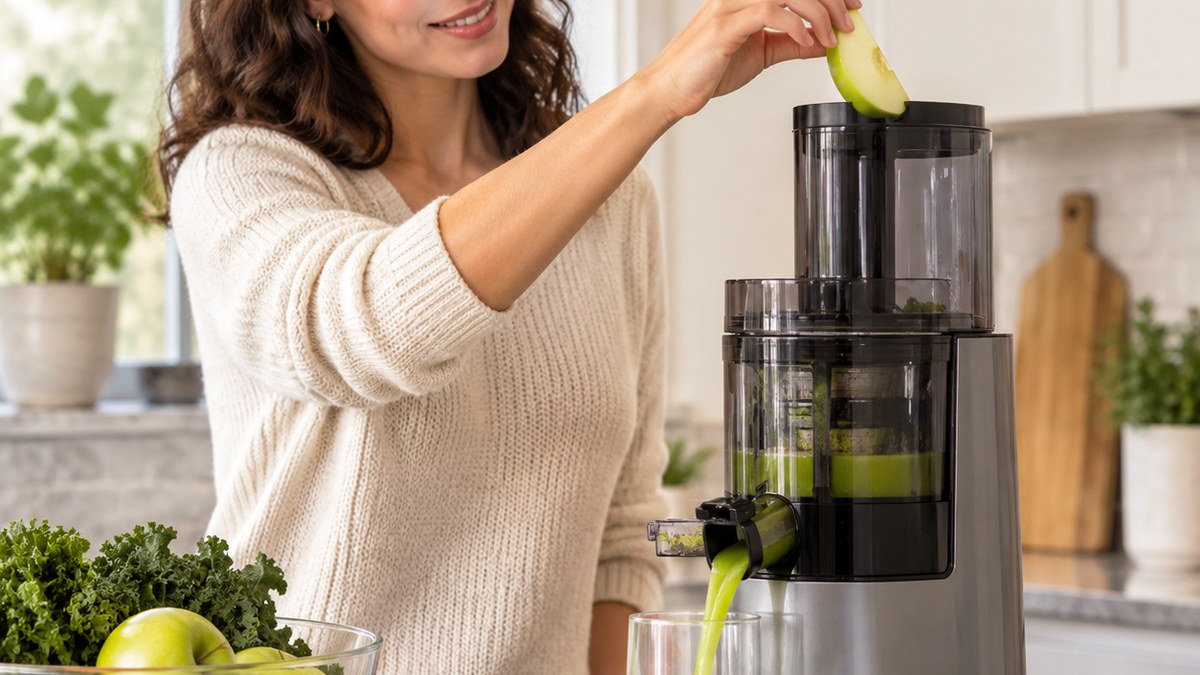
Centrifugal juicers are notorious for failing at leafy greens. You feed an entire bundle of spinach or lacinato kale into a fast spinner, and it immediately blasts whole leaves straight into the pulp bin without extracting more than three drops of liquid. Hurom handles greens with surgical efficiency. Because the auger takes its time crushing cell walls, leafy greens yield dark, rich, deeply pigmented juice. Parsley, cilantro, mint, and wheatgrass get pressed down into ribbon-like sheets of completely dry pulp.
2. Celery and Stringy Vegetables
If you have ever done a morning celery juice streak, you know long celery fibers can wrap around rotating shafts like fishing line and stall cheap motors. Hurom’s cutting blades inside the self-feeding hopper pre-chop the ribs before feeding them down into the auger. I cut long stalks in half just out of habit, toss them into the hopper, close the lid, and let the machine work. The pulp chute ejects tightly packed pellets of celery fiber, and the juice comes out silky and clean with barely any sediment.
3. Dense Root Crops (Carrots, Beets, Ginger, Turmeric)
Hard roots are the ultimate torture test for any masticating juicer. You can hear the AC induction motor adjust its torque when you feed in raw, thick carrots. The motor hum deepens, but it never whines or struggles. The juice yield on organic carrots is remarkable; two large carrots provide nearly a full glass of sweet, bright orange juice. Fresh ginger root presses smoothly without leaving woody chunks behind.
4. Soft Fruits and Citrus
Soft fruits like overripe berries, peaches, or pineapples can sometimes create a thicker, smoothie-like consistency in slow juicers because of their soluble fiber content. Hurom solves this by letting you alternate between firm ingredients and soft fruit. If I am making a citrus-pineapple-cucumber blend, I alternate chunks of pineapple with crisp cucumber slices to keep the flow moving briskly through the chamber. Oranges and grapefruits come out tasting sweeter and less acidic than store-bought juice because the cold-press method does not grind bitter white pith oils into the drink.
To view the full specifications and compare motor types across their current models, check out the official store: Visit Official Hurom America Website Now.
The Noise Factor: A Morning Revelation
I cannot overstate how quiet this machine runs. Hurom’s single-phase induction motor operates at around 45 to 50 decibels. To put that in perspective, normal conversational speech sits around 60 decibels. When the juicer is running, all you hear is a gentle, rhythmic hum and the wet, satisfying crunch of fresh vegetables being pressed against the chamber walls.
I can wake up early, make a full 32 ounces of green juice while listening to a podcast on low volume through my phone speaker, and not disturb anyone sleeping down the hall. For busy households with early risers, toddlers, or light sleepers, this alone changes the whole dynamic of daily juicing.
The Cleanup Reality: Is It Really Easy to Wash?
Every juicer review claims cleanup takes thirty seconds. Let’s be clear: no juicer on earth cleans itself in thirty seconds unless you count just rinsing a water cup. However, Hurom’s engineering makes cleaning far less agonizing than older-style machines.
Their newer machines use an easy-clean strainer system—two interlocking slotted components made from durable Ultem plastic instead of the traditional tiny metal mesh screen. On older juicers, tiny plant fibers would get wedged inside hundreds of microscopic metal wire holes, forcing you to scrub vigorously for ten minutes with a stiff toothbrush.
With the slotted system, you simply hold the two pieces under warm running tap water and the plant fibers wash away in seconds. Here is my exact cleaning routine timed on my phone:
- Rinse flush (30 seconds): Before taking the chamber apart, I close the juice cap, pour a cup of warm water into the running hopper, let it swirl around, and open the cap. This flushes out about 80% of the residual pulp and liquid.
- Disassembly (15 seconds): Unlock the hopper, lift out the auger, and unclip the strainers.
- Under the tap (90 seconds): Rinse the auger, strainers, and chamber under warm running water with a soft sponge.
- Drying rack (15 seconds): Set everything on a clean dish mat to air-dry.
Total time from switch-off to clean counter: around two and a half to three minutes. Because it does not feel like an epic kitchen project, I actually use the machine four to five mornings a week instead of leaving it to gather dust.
Beyond Morning Juices: Nut Milks, Sorbets, and Batching
When I bought the machine, I viewed it strictly as a vegetable juicer. But over the last several months, I started experimenting with other features that make it much more versatile.
Fresh almond milk has become a weekly staple in my house. You soak raw almonds in water overnight with a pinch of sea salt, drain them, and mix them with fresh filtered water. Then, with the juice cap closed, you ladle the soaked almonds and water together into the hopper. The auger grinds the nuts into a fine paste while emulsifying the natural oils with the water. When you release the juice cap, out flows the richest, creamiest almond milk you have ever tasted—completely free of guar gum, carrageenan, or artificial stabilizers.
My kids love the frozen treat attachment. If you throw frozen bananas, mangos, and dark cherries into the chamber with the blank strainer installed, the auger crushes the fruit into an all-fruit sorbet that has the exact texture of soft-serve ice cream. No dairy, no added cane sugar, and zero guilt on warm summer evenings.
You can find recipe ideas and accessory details directly on their site: Visit Official Hurom America Website Now.
What Other American Kitchens Are Saying
My experience has been overwhelmingly positive, but I always like to see what other long-term owners across the United States are reporting after months of daily use. Here are a few authentic comments from people using Hurom cold press juicers in their everyday routines:
“I made the leap from an old centrifugal machine that I bought in college, and the difference in juice quality blew me away. The juice doesn’t separate into water and foam within five minutes. I prep my celery and greens on Sunday afternoon, fill four amber glass bottles to the brim, and my Wednesday morning juice tastes just as crisp as Sunday’s.”
— Marcus T., Austin, TX
“As a mother of two toddlers, the noise level was the deciding factor for me. My previous juicer sounded like a lawnmower and scared my kids. With our Hurom, I can juice early in the morning right next to the living room while they’re still asleep. Plus, the sorbet maker attachment has saved us a fortune on store-bought frozen desserts.”
— Elena R., Denver, CO
“I juice a ton of leafy greens, turmeric, and ginger for joint inflammation. The pulp that comes out of this thing is bone-dry. Yes, you have to peel tough citrus rinds and chop fibrous celery so it doesn’t bunch up, but the yield per pound of organic produce is easily 20% higher than my old setup.”
— David K., Portland, OR
“Customer service through Hurom America was quick when I misplaced my hopper silicone gasket down the garbage disposal. I submitted a ticket, paid a few bucks for a replacement piece, and had it on my doorstep four days later. It’s refreshing when a premium company actually stocks spare parts.”
— Sarah W., Raleigh, NC
Things You Should Know Before Buying (The Real Quirks)
No appliance is completely flawless, and anyone who tells you otherwise is probably trying to sell you something with rose-colored glasses. Here are a few practical quirks you should keep in mind before ordering:
- Price Point: Hurom juicers sit at the higher end of the kitchen appliance spectrum. They are long-term investments backed by long motor warranties, but they are definitely not budget impulse buys.
- Prep Work Still Matters: While their self-feeding hoppers let you drop in whole apples or handfuls of berries without using a push rod, you still need to peel citrus fruits with bitter rinds and remove large stone fruit pits (like peaches and plums) so you don’t crack the strainers.
- Pulp Management: If you are juicing very soft, mealy apples, you will get a thicker juice with slightly more body. I recommend pairing softer fruits with crisp, watery ingredients like cucumbers or crisp Granny Smith apples to keep the strainer slots clear.
- Vertical Height: Double-check the clearance under your kitchen cabinets if you plan to leave it fully assembled on your counter. While the footprint is small, some models are relatively tall with the hopper attached.
Comparing Hurom to Horizontal Juicers
Before purchasing from Hurom America, I spent weeks debating between a vertical machine and a horizontal twin-gear juicer. Horizontal machines are legendary among dedicated wheatgrass purists, but their usability for general households has drawbacks.
Horizontal machines require you to stand over them continuously, pushing individual carrot batons down a narrow feed tube with a wooden or plastic plunger. You have to feed ingredients one stick at a time. Hurom’s self-feeding vertical hopper allows you to load the chamber, turn the dial to on, and walk over to the stove to flip your eggs while the machine feeds itself. In terms of kitchen efficiency and morning time savings, the vertical format wins hands down for modern homes.
Who Is Hurom Right For?
If you only plan to juice twice a year when a January fitness kick strikes, you probably don’t need a high-end masticating machine. A basic blender or budget centrifugal juicer will get you through the week.
However, Hurom is absolutely worth the investment if:
- You want to juice green vegetables, herbs, and dense roots without wasting expensive organic groceries.
- You want to batch juice for 2 to 3 days at a time without nutrient loss or rapid separation.
- You live with family or roommates and cannot stand loud, screeching morning appliances.
- You care about kitchen design and want a sleek machine you can proudly leave out on the counter.
- You want to make fresh nut milks, oat milks, and frozen fruit sorbets without buying extra single-purpose gadgets.
Final Verdict
Juicing only yields wellness benefits if you actually do it consistently. The biggest hurdle with juicing has never been drinking the juice; it has always been the friction of prep time, ear-splitting noise, and twenty minutes spent scrubbing wire mesh over a wet sink. By engineering away almost all of those pain points, Hurom created an appliance that integrates smoothly into a busy everyday life.
My kitchen counter looks cleaner, my mornings are peaceful, and my refrigerator is always stocked with crisp, cold-pressed green juice that tastes like it came from an upscale juice bar down the street. If you are ready to take your home wellness routine to the next level, I recommend taking a close look at what Hurom has built.
Browse their latest models, read verified buyer reviews, and find seasonal deals right here: Visit Official Hurom America Website Now.